SuperCMO: an AI CMO for Claude, but what about your brand guidelines?
SuperCMO is a free, open source set of skills that turns Claude Code, Cursor or Codex into an AI CMO. What it does, and why it does not keep your visuals on brand.

Jean-Baptiste DuquesneSEO, GEO & content operations · Published 14 November 2026
In short: SuperCMO is a free, open source set of skills that turns Claude Code, Cursor or Codex into an "AI CMO". It learns your brand from your website, analyzes your ads and your competitors' ads, ranks what to test, writes the copy and produces visuals. A human approves every step. What it does not do: guarantee that every visual follows your brand guidelines. That is the job of a brand template platform.
What SuperCMO does
Launched in late October 2026 on Product Hunt, where it reached sixth product of the day, SuperCMO presents itself as a marketing team inside your coding agent. The skills are published under the Apache 2.0 license on GitHub and install with a single command. In practice, the agent:
- reads your website to understand your brand, your audience, your offer and your tone;
- studies your ads and your competitors' ads;
- ranks the tests to run first;
- writes copy adapted to each platform;
- produces ads, product photos, UGC-style videos and images.
The tool is free with your own model keys, or paid per use. One important point: the agent checks in at every step, and nothing expensive is rendered until you approve it.
Why it matters
SuperCMO shows where AI-assisted marketing is heading: no longer one tool per task, but an agent that chains analysis, writing and production. For a small team, it is a real time saver on research and first drafts. It is also a sign that marketing work is moving into AI assistants such as Claude, through skills and connectors.
The limit: generated visuals, not on-brand visuals
SuperCMO's visuals are generated by image models from a description of the brand. They can look good, but nothing locks your fonts, your colors, the position of your logo or your mandatory legal mentions. For a brand that publishes in several countries and dozens of formats, every visual then has to be checked, and often redone.
Questions to ask before automating production:
- Who guarantees that the logo, colors and fonts are correct in every format?
- How do you adapt one visual to every size without redoing it?
- How do you translate and adapt a campaign per market without breaking the layout?
- Who approves, and where is the record of that approval?
Generated visuals or brand templates: the difference
| Criterion | Visuals generated by an agent | Visuals from brand templates |
|---|---|---|
| Logo, colors, fonts | Inspired by the brand, not locked | Locked by the design team |
| Every format | Each size generated separately | Master and sizes stay in sync |
| Translation | A new image per language | Text replaced, layout kept |
| Approval | Human check of each image | Approval workflow with history |
| Best for | Exploring ideas and first drafts | Producing campaigns at scale |
The two approaches are not exclusive: the first is useful upstream, to explore, and the second downstream, to produce.
Keep the agent, add the framework
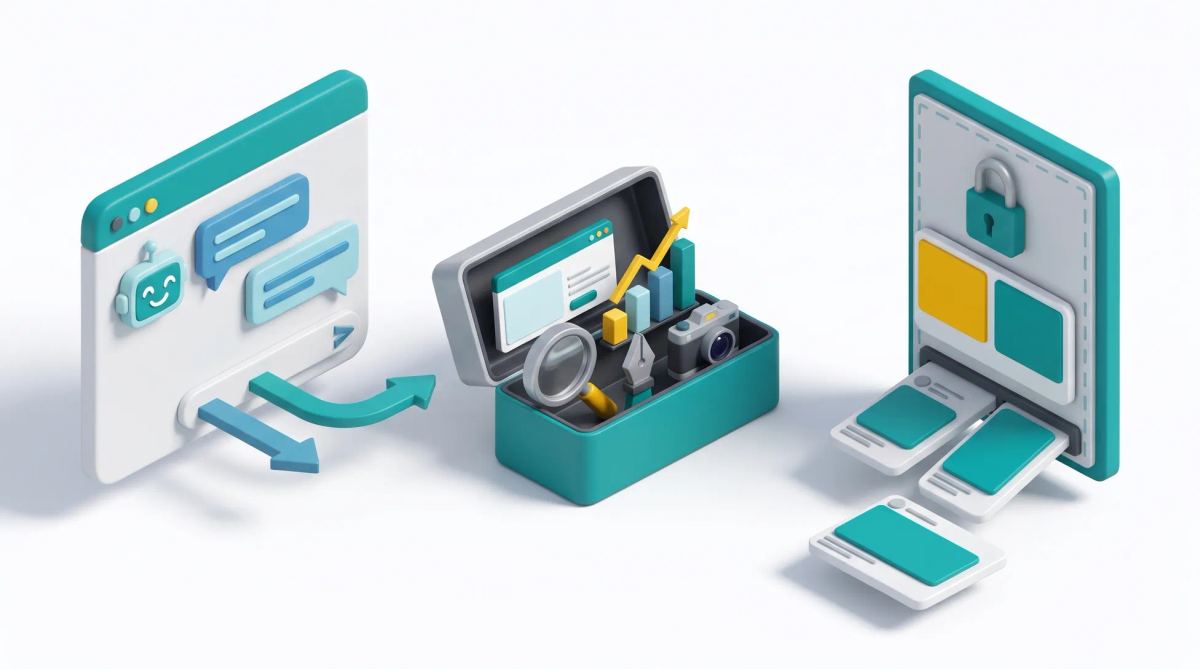
The answer is not to give up the agent, but to give it a framework. With Brandeploy, visuals come out of templates designed by your designers: brand elements are locked, the master and every size stay in sync, and translation applies without touching the layout. Thanks to the Brandeploy MCP server, Claude can fill these templates directly: the agent keeps the analysis and the writing, and visual production stays on brand.
A simple scenario: the agent suggests three hooks for a campaign, you approve one, Claude fills the campaign template in Brandeploy and returns the formats ready to publish. To see how it works on your own campaigns, explore our creative AI automation platform or book a demo.
Key takeaways
- SuperCMO is a good, free way to try agent-driven marketing.
- It produces fast, but it does not guarantee brand consistency.
- For a multi-format or multi-market brand, pair the agent with locked templates: AI proposes, the brand guidelines frame.
Source: SuperCMO AI on Product Hunt, consulted on November 14, 2026.
FAQ
What is SuperCMO?
SuperCMO is a set of open source agent skills, under the Apache 2.0 license, that turns Claude Code, Cursor or Codex into an AI CMO. It learns your brand from your website, analyzes ads, ranks tests, writes copy and produces visuals.
Is SuperCMO free?
Yes, with your own model keys, which you pay to the model providers directly. A pay-per-use option through SuperCMO also exists.
Which tools does SuperCMO work with?
Claude Code, Cursor and Codex. The skills install with a single command from GitHub.
Can SuperCMO follow my brand guidelines?
It takes inspiration from your website, but it does not lock brand elements such as fonts, colors, logo position or legal mentions. Brand templates, like those in Brandeploy, do.
How does Brandeploy work with an AI agent like Claude?
Through the Brandeploy MCP server, Claude can open your brand templates, fill them with the approved copy and images, and return every format ready to publish. The agent writes, the templates keep each visual on brand.

Written by
Jean-Baptiste Duquesne
SEO, GEO & content operations
Web pioneer since 1995, founder of the recipe site 750g.com (sold to Webedia), now industrialising SEO and GEO content production with AI.
Ready to scale your content production?
Book a demo