AI banner generator: performance and brand consistency
The quest for the perfect ad banner (one that captures immediate attention, delivers a precise message, and maximizes click-through rates) is the holy grail of digital marketing. Today, an AI banner generator is no longer a futuristic…

Jean-Baptiste DuquesneSEO, GEO & content operations · Published 25 July 2025 · Updated 25 October 2026
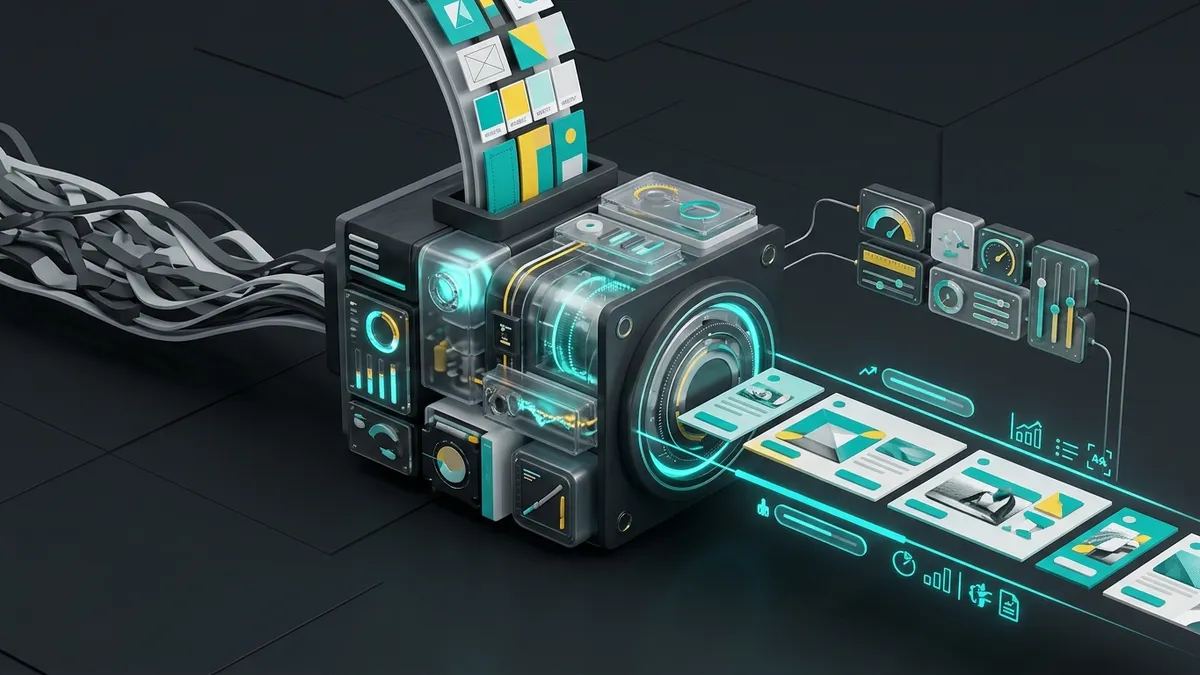
The quest for the perfect ad banner (one that captures immediate attention, delivers a precise message, and maximizes click-through rates) is the holy grail of digital marketing. Today, an AI banner generator is no longer a futuristic concept; it is a disruptive reality for enterprise teams. These solutions leverage advanced algorithms to analyze large datasets and generate visuals and animated HTML5 banners optimized for performance. However, elite marketing requires a balance: raw performance must never compromise brand integrity. A banner that earns clicks but fails to represent your visual identity is a long-term strategic failure. The most effective approach lies in a creative automation platform that merges predictive intelligence with strict brand governance.
What is an AI banner generator?
An AI banner generator is a software tool that uses artificial intelligence to automate the creation of display ads. Unlike traditional editors, it suggests layouts, selects relevant imagery and adapts typography based on your goals, then produces every size and variation you need. When it outputs HTML5, the resulting ads are lightweight, animated and accepted by the major ad networks. In an enterprise setting, it works best inside a broader platform that keeps your brand assets and rules in one place.
How an AI banner generator works
The process usually follows a simple three-step workflow that focuses on input rather than manual clicking.
1. Define the creative parameters
You start by providing the core elements: a headline, a call to action, and brand assets such as logos or product photography. Some platforms can also pull customer data from a CDP to personalize the message.
2. Let the AI handle layout and animation
The AI analyzes the assets and selects a composition for each dimension. It does not just stretch the image: it crops intelligently, repositions text and applies HTML5 animations that draw the eye without slowing down page load.
3. Connect live data
Generators can also connect to live data feeds, so banner content such as prices or stock levels is updated within the HTML5 file itself. The customer always sees accurate information.
How AI makes your banners more high-performing
The primary advantage of using an AI banner generator is its capacity for predictive analysis. By examining data from previous campaigns and market trends, AI identifies patterns that human eyes might miss. For instance, it might determine that specific compositions or color palettes result in a higher return on investment for your particular audience. Using an ad generator with AI allows your team to base creative decisions on data rather than subjective intuition. This ensures that every visual element serves a measurable purpose in your conversion funnel.
Furthermore, AI excels at scaling production. Instead of tasking a designer with the manual creation of dozens of versions, AI content generation can produce hundreds of variations in seconds. This capability is essential for large-scale A/B testing, enabling marketers to test diverse combinations of copy, imagery, and calls-to-action to find the winning formula quickly. Many organizations find that an ad creative automation tool is the most efficient asset to accelerate growth. Testing Instagram ad variations at scale becomes a matter of minutes rather than days. This efficiency is especially transformative if you view Instagram stories as a high-volume brand production platform rather than a manual editing task.
The risk of performance at all costs: maintaining brand governance
A significant risk with generic AI tools is the sacrifice of brand essence for the sake of "clickability." If an algorithm determines that a specific shade of orange generates the most clicks globally, it may suggest it for your ads even if it creates a total mismatch with your brand identity. This is a common pitfall when using basic tools that lack creative guardrails. Sustainable growth requires that every touchpoint reinforces, rather than contradicts, your brand voice. For those exploring a Placid alternative, implementing creative automation software with built-in governance is the only way to scale safely.
To mitigate this, enterprise-grade solutions implement "intelligent templates." In this model, your creative team defines the fixed elements (such as logos, fonts, and core layout) while the AI optimizes the fluid variables. This ensures that every asset generated is both high-performing and perfectly on-brand. Selecting a tool that respects these boundaries is vital for maintaining professional standards. This approach is superior to most Abyssale alternatives that often prioritize volume over strict brand fidelity.
An integrated platform for consistent global campaigns
True efficiency is born from the synergy between AI and asset management. By connecting an AI banner generator to your Digital Asset Management (DAM) system, the AI works from your actual approved resources rather than stock photography. This allows for bulk visual generation that feels personalized and authentic. It transforms the way teams handle creative production automation by ensuring every new visual rests on a foundation of approved high-quality assets. This integration is why a creative management platform (CMP) is becoming essential for large marketing departments.
Moreover, performance is increasingly driven by rich, animated formats. A modern tool must move beyond static imagery. An advanced multi-format banner creation tool can use AI to generate animated HTML5 banners that capture motion and engagement while staying within the technical and aesthetic limits of your brand framework. To choose the right solution for your stack, you can consult our best HTML5 banner creation tools comparison. Some teams seek results through simplified ad banner and video creation, which focuses on speed and ease of use. This is particularly useful for those seeking a high-performing visual creation tool for Google Display or social media platforms where movement is key.
Real-world use cases and best practices
Retail and e-commerce brands often lead the way, using AI to generate large sets of personalized product ads for retargeting. Travel companies use these tools to update banners with the latest flight prices or weather-based offers. In both cases, localized versions of the ads can be ready for deployment in far less time than with manual production.
AI is not a "fire and forget" solution, though. Avoid relying too much on default templates, and always review the final output for cultural context, especially when global and local teams work on the same campaign. The quality of the output also depends directly on the assets and information the AI works from, so feed it approved, high-quality brand material.
Brandeploy: where AI and brand governance converge
Brandeploy is a creative automation and brand management platform that helps enterprise teams scale content production, banner creation, and campaign deployment across multiple markets while maintaining absolute brand integrity. Our AI banner creation features are specifically designed for businesses that refuse to compromise identity for speed. By integrating AI directly into a robust governance ecosystem, Brandeploy ensures that predictive performance and brand safety coexist perfectly. To see how your organization can achieve both scale and precision, we invite you to book a demo.
FAQ
What is an AI banner generator?
An AI banner generator uses machine learning to automate the design of display ads. Based on your headline, call to action and brand assets, it suggests layouts, adapts typography and produces every size and variation you need, often as animated HTML5 files. Unlike manual design, it can produce hundreds of variations quickly, so each asset can be tested and optimized for click-through rates and campaign ROI.
How does AI improve the performance of digital display ads?
AI improves performance through predictive analysis and high-speed iteration. It identifies visual patterns that trigger user engagement, allowing for sophisticated AI creative variation generation. By automating A/B testing at scale, AI helps marketers quickly discover which specific combinations of imagery and messaging resonate best with their target audience, leading to higher conversion rates.
What are the risks of using generic AI for banner creation?
The biggest risk is brand dilution. Generic AI often prioritizes "clicks" over brand identity, leading to visuals that clash with your official style guide. To prevent this, enterprises use tools with smart templates that lock brand-critical elements like logos and fonts, ensuring creative production automation never compromises the long-term integrity of the brand's visual voice.
Can AI-generated banners update prices or stock in real time?
Yes. Many AI banner generators can connect to live data feeds and update content such as prices or stock levels within the HTML5 file itself, so the customer always sees accurate information. Travel companies use this to show the latest flight prices or weather-based offers, and retailers use it to run large sets of personalized product ads for retargeting.
Can AI-generated banners really increase Return on Ad Spend (ROAS)?
AI can help improve ROAS by optimizing the visual elements that drive engagement. By using a high-performing visual creation tool for Google Display ads, companies can focus their budget on assets that test well. Reducing creative fatigue and quickly swapping low-performing ads both contribute to a more efficient ad spend.

Written by
Jean-Baptiste Duquesne
SEO, GEO & content operations
Web pioneer since 1995, founder of the recipe site 750g.com (sold to Webedia), now industrialising SEO and GEO content production with AI.
Ready to scale your content production?
Book a demo