Bannerflow vs Storyteq (2026): ad automation or content marketing platform?
Bannerflow focuses on ad creative automation, Storyteq on an all-in-one content marketing platform with DAM and workflows. A sourced comparison and who each platform fits.

Jean-Baptiste DuquesneSEO, GEO & content operations · Published 25 October 2026 · Updated 13 November 2026
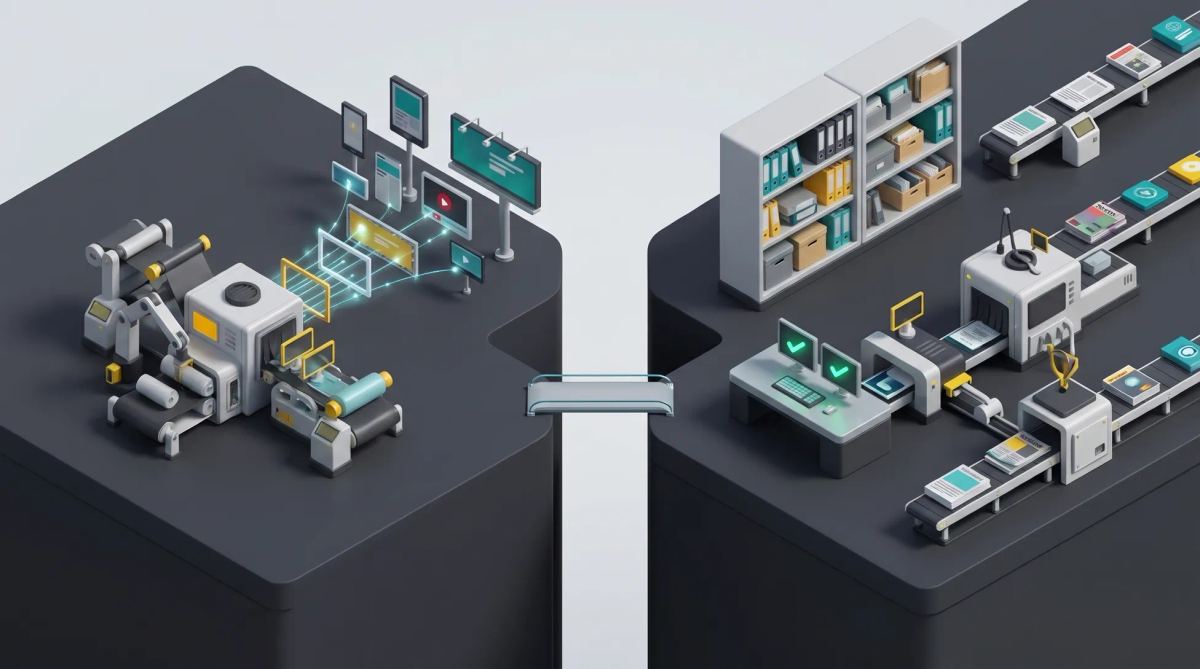
In short: Bannerflow and Storyteq are not two versions of the same tool. Bannerflow is built around advertising: it produces, scales, localizes and publishes display, video and social ads. Storyteq presents itself as an all-in-one content marketing platform, with a DAM, content adaptation including video and print, and briefing and approval workflows. Choose Bannerflow if your scope is ads; choose Storyteq if you want to equip the whole content supply chain.
Method: information taken from the official websites of both vendors in November 2026. No price is quoted, as neither vendor publishes one on its homepage.
Bannerflow vs Storyteq at a glance
| Criterion | Bannerflow | Storyteq |
|---|---|---|
| Positioning | Platform that "combines AI-powered creativity and automation" to build, scale and optimize campaigns | "AI-powered Content Marketing Platform" |
| Scope | Advertising production and distribution | Full content supply chain |
| DAM | Not presented as a core module | Yes, Content Portal |
| Ad formats | HTML5 display, video, social, DOOH | Omnichannel adaptation, including video |
| Not covered | Yes, in Adaptation Studio | |
| Dynamic and feed-based ads | Yes, from product feeds | Not the main focus |
| Localization | AI translation with brand controls | Versioning for every channel and market |
| Workflows and approvals | Collaboration and campaign management | Briefs, reviews and approvals in Collaboration Hub |
| AI | AI-assisted creation, translation and optimization | Halo Intelligence insights |
| Publishing | To "100+ advertising platforms" | Through connected channels and tools |
| Best for | Performance and display teams | Large organizations equipping their whole content chain |
Two different starting points
Bannerflow describes itself as a platform that combines AI-powered creativity and automation to help teams build, scale and optimize campaigns across channels. It claims more than 2,000 brands, including SEGA, Subway, HP, Meliá and Audi.
Storyteq describes itself as an AI-powered content marketing platform. It is owned by Inspired Thinking Group, according to the copyright notice on its website, and lists customers such as Nestlé, KFC, BMW, Heineken and Walgreens. Its offer is organized in modules: Content Portal (DAM), Adaptation Studio (creative automation) and Collaboration Hub (content workflows).
The difference is structural: Bannerflow starts from the ad and goes down to delivery; Storyteq starts from the asset library and goes up to campaign rollout.
Ad production, formats and publishing
This is Bannerflow's home ground. A master creative is scaled into every format and version, product feeds generate dynamic ad variations, translation localizes ads at scale, and campaigns are scheduled and published across channels and markets. Bannerflow states that it integrates with more than 100 advertising platforms across display, social, affiliate and DOOH.
Storyteq's Adaptation Studio versions content for every channel and market, but its publishing side is less centered on ad platforms. For teams whose daily job is launching and rotating ads, Bannerflow covers more of the chain. Read our Bannerflow review for details.
DAM, workflows and the wider content supply chain
This is where Storyteq leads. Its Content Portal is a DAM to find, organize and track content in one place; its Collaboration Hub brings campaign briefs, reviews and approvals together; its Adaptation Studio covers omnichannel content including video and print. An organization can run the content chain end to end in one suite.
Bannerflow does offer collaboration and campaign management, but it does not present a full DAM as a core module. Teams that need a central library for all brand assets usually pair it with a separate DAM. Read our Storyteq review for details.
Localization and dynamic content
Both platforms localize. Bannerflow puts it at the heart of ad production, with AI translation and feed-based variations. Storyteq localizes through templates used by local markets.
Each vendor publishes a customer example:
- Meliá Hotels International with Bannerflow: the in-house team produces display campaigns for seven brands and two loyalty programs across 43 countries. Bannerflow reports "a 50% reduction in the time it takes to build all their display campaigns".
- Heineken with Storyteq: Storyteq reports a 40% reduction in content production costs, 40,000 localized assets generated from templates and 4,600 users across 80 countries.
These figures come from each vendor's case study and are not independently verified.
AI features and insights
Bannerflow uses AI for creation, translation and optimization of ads. Storyteq highlights Halo Intelligence for AI-powered insights across the content chain. In both cases, check during a trial which features are available today and which are announcements.
Pricing model and implementation effort
Neither vendor publishes prices; both work on a quote basis. The implementation effort differs with scope: a targeted ad tool goes live faster than a suite that replaces your DAM and your approval workflows. For a selection checklist, read enterprise creative automation platform: selection criteria.
Which one should you choose?
- Performance or display team that launches many ads: Bannerflow.
- Large organization that wants one suite for DAM, adaptation and approvals: Storyteq.
- Team that must quickly adapt print, digital and product content, with autonomous local teams: a lighter creative automation platform, such as Brandeploy.
To see other options, read our Storyteq alternatives, our Bannerflow alternatives and our comparison of creative automation platforms.
Brandeploy: creative automation for brands and local teams
Brandeploy is a creative automation platform that produces visuals, banners and videos from brand-locked templates, translates and localizes creatives, routes them through approval workflows and stores final files in its asset library. Nuxe uses it so that local teams in 60 markets adapt content themselves, and reports €350K in local savings (Nuxe case study). To see it on one of your campaigns, book a demo.
FAQ
What is the difference between Bannerflow and Storyteq?
Bannerflow focuses on advertising: it produces, scales, localizes and publishes display, video and social ads. Storyteq is a content marketing platform covering the wider content chain, with a DAM, content adaptation including video and print, and approval workflows.
Does Storyteq include a DAM? Does Bannerflow?
Storyteq includes a DAM called Content Portal. Bannerflow offers collaboration and campaign management but does not present a full DAM as a core module, so it is often paired with a separate DAM.
Which is better for HTML5 display banners?
Bannerflow, whose creative studio, versioning, feed-based ads and publishing to more than 100 advertising platforms are built for display production and delivery.
Who owns Storyteq?
According to the copyright notice on its website, Storyteq belongs to Inspired Thinking Group (ITG) Limited.
What are the alternatives to Bannerflow and Storyteq?
Celtra, Smartly, The Brief, Canva for enterprise teams and Brandeploy, depending on whether you need ad delivery, a full content suite, self-service design or on-brand variations for local teams. See our comparison of creative automation platforms.

Written by
Jean-Baptiste Duquesne
SEO, GEO & content operations
Web pioneer since 1995, founder of the recipe site 750g.com (sold to Webedia), now industrialising SEO and GEO content production with AI.
Ready to scale your content production?
Book a demo