
Pimento AI: visual styles, resizing and photorealism
In the rapidly evolving landscape of generative AI, tools like Pimento are emerging to bridge the gap between raw AI generation and professional brand aesthetics. Moving beyond simple prompts, these platforms focus on visual styles ,…
Rédaction Brandeploy · Published 16 May 2025 · Updated 12 October 2026
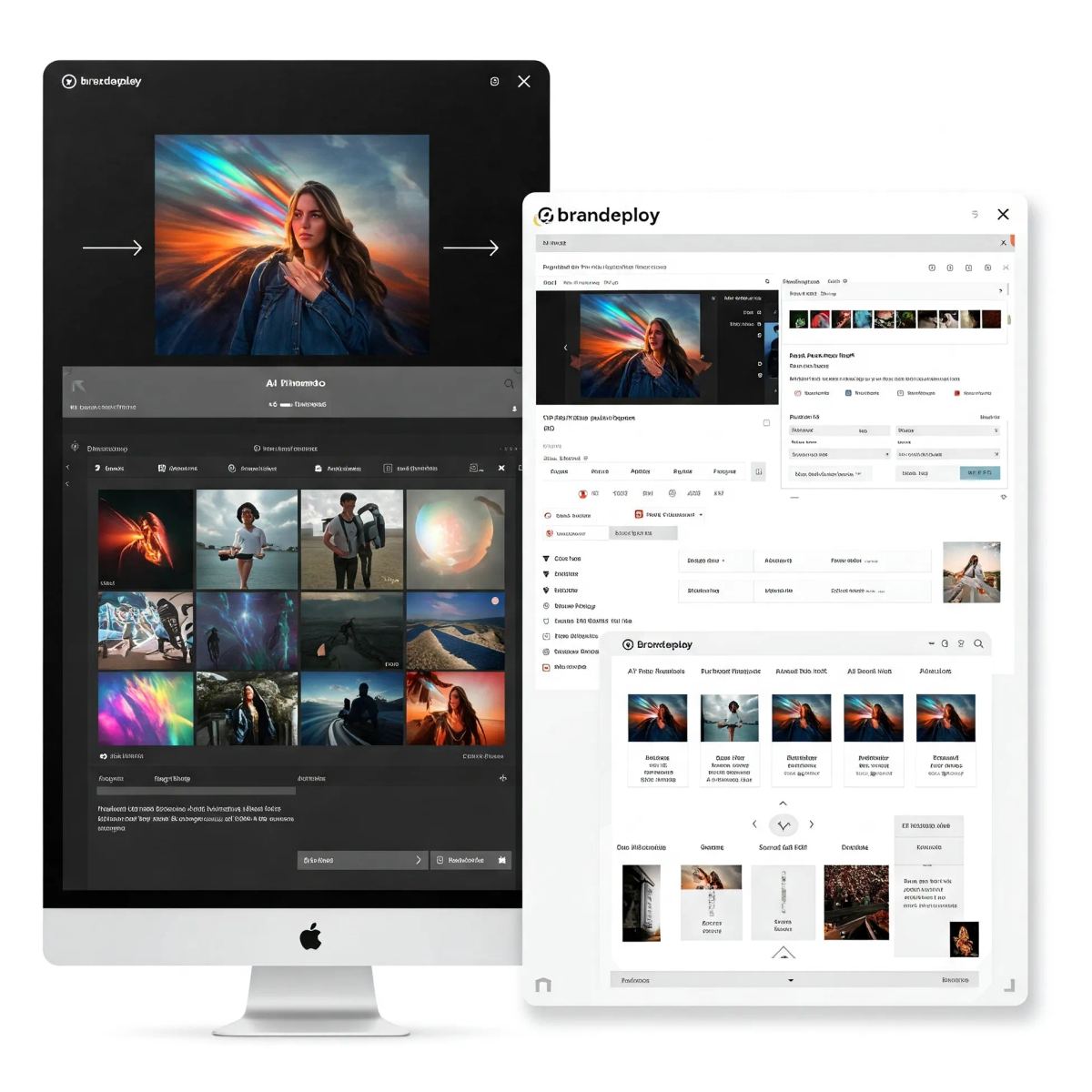
In the rapidly evolving landscape of generative AI, tools like Pimento are emerging to bridge the gap between raw AI generation and professional brand aesthetics. Moving beyond simple prompts, these platforms focus on visual styles, intelligent format adaptation, and high-fidelity photorealism. For marketing teams, this represents a shift toward more controlled AI and content creation, where the technology serves as a sophisticated digital darkroom and layout assistant.
What is Pimento AI?
Pimento is a specialized AI moodboard and style extraction tool designed to help creative teams maintain visual coherence. By focusing on the "soul" of an image—its textures, lighting, and composition—it allows brands to scale their production while staying "on-brand." This approach is essential for adapting your brand strategy to AI without losing the unique identity that differentiates a company from its competitors.
Key Features of Advanced Visual AI Tools
Platforms in the Pimento ecosystem offer specific capabilities that go far beyond basic image generation. Understanding these features is vital for modern AI-driven marketing.
Custom Style Training
One of the most powerful features is the ability to train the AI on a brand's specific image corpus. By analyzing a brand's Instagram feed or seasonal catalog, the AI learns to replicate the visual patterns that define that brand's look. This ensures that every generated asset feels like it belongs to the same family of content.
Smart Resizing and Adaptation
Manually resizing assets for different platforms is a bottleneck. AI-driven smart resizing automatically adapts visuals to various formats—from wide banners to vertical stories—while preserving the composition and quality. This efficiency allows creative teams to focus on strategy rather than repetitive tasks.
Photorealistic Refinement
Achieving realistic human features has often been a struggle for AI. Newer tools use deep learning to refine lighting, skin textures, and facial expressions. This makes AI-generated characters viable for high-end professional campaigns, with applications such as the way H&M clones its mannequins for e-commerce.
Challenges for Enterprise Adoption
While the technology is impressive, implementing these tools within a large organization requires a structured deployment process. Brands often face a "style drift," where AI-generated content starts to look generic or deviates from established guidelines. There is also the significant hurdle of AI hallucinations, where the model might insert unwanted elements into a branded visual.
To mitigate these risks, human oversight remains non-negotiable. The ethical use of AI dictates that we must validate AI output to ensure it remains original and respectful of brand values. Integrating these tools into existing workflows requires a robust production process.
Advanced Workflows: From Creativity to Execution
The future of design involves a hybrid model where human creativity is amplified by machine precision. With AI-augmented creativity, designers can iterate on concepts ten times faster, pushing boundaries much like Krea AI does with real-time tools. However, the true value is unlocked when these tools are part of a larger communication strategy that considers how content is distributed across global markets.
For companies managing multiple regions, maintaining global brand consistency is the ultimate goal. This involves not just creating the image, but ensuring the right architecture is in place to support localized variations without losing the core message, which requires human-AI synergy. In this context, data and AI work together to analyze which visual styles perform best in specific demographics, allowing for data-driven creative decisions.
Brandeploy: The Governance Layer for AI Creativity
While Pimento and similar tools excel at visual transformation, Brandeploy provides the essential framework for controlled enterprise application. Brandeploy is a creative automation and brand management platform that helps enterprise teams scale content production while maintaining total governance over the execution of their AI marketing strategy. By connecting your DAM to intelligent templates, Brandeploy allows human teams to validate AI-stylized assets through structured approval circuits. This ensures that every visual, whether AI-enhanced or traditionally designed, meets the highest brand standards before deployment. To see how you can safely scale your brand visibility, book a demo of the Brandeploy platform.
FAQ
What is Pimento AI and how does it help brands?
Pimento is a generative AI tool specifically designed for creative professionals and brands to maintain aesthetic consistency. Unlike generic AI generators, it focuses on visual styles, photorealistic character refinement, and smart resizing, allowing teams to train the model on their specific brand universe to ensure every generated asset aligns with their unique visual identity.
How does custom style training work for brand consistency?
Pimento allows brands to upload a corpus of existing imagery, such as an Instagram feed or professional catalogs. The AI then learns the distinct patterns, lighting, and textures of that brand. This custom style training ensures that all future AI-generated content follows the brand's established aesthetic guidelines without manual prompting for every detail.
How do tools like Pimento integrate with creative automation?
Creative automation platforms like Brandeploy act as the governance layer for AI tools. While Pimento generates or stylizes visuals, Brandeploy manages the AI deployment process, ensuring assets are validated, stored in a DAM, and applied via smart templates. This prevents the "randomness" of AI and ensures enterprise-grade control over global campaigns.
What are the benefits of AI smart resizing for marketing?
Smart resizing uses AI algorithms to intelligently adapt a single visual into multiple aspect ratios (banners, stories, social posts). Unlike traditional cropping, it analyzes the composition to preserve the subject's focus and quality, significantly accelerating the AI and content creation workflow for marketing teams.
What are the risks of using AI visual tools in large companies?
Brands often face style drift, where AI-generated content starts to look generic or moves away from established guidelines. AI hallucinations are another risk, as the model may insert unwanted elements into a branded visual. Human oversight remains essential: teams must validate AI output to keep it original and aligned with brand values, within a structured production process.
Written by
Rédaction Brandeploy
Ready to scale your content production?
Book a demo