Google Veo 2: image-to-video AI, Veo 3.1 and Gemini Omni
Many people search for "VO2 Google" or "VO2 AI". The model they are looking for is Veo 2 , the video generation model from Google DeepMind. Veo 2 can turn a text prompt or a still image into a short video clip. Since its launch, Google has…
Rédaction Brandeploy · Published 06 May 2025 · Updated 25 October 2026
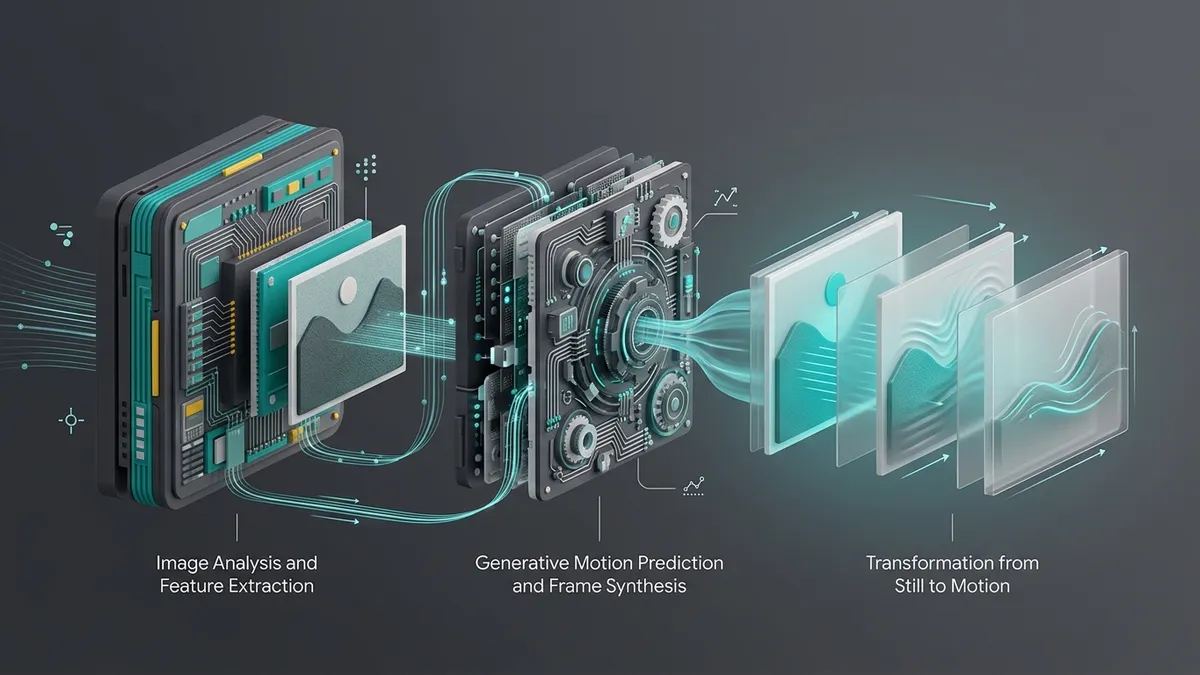
Many people search for "VO2 Google" or "VO2 AI". The model they are looking for is Veo 2, the video generation model from Google DeepMind. Veo 2 can turn a text prompt or a still image into a short video clip. Since its launch, Google has released Veo 3, Veo 3.1 and, in May 2026, a new model family called Gemini Omni. This guide, updated in October 2026, explains what Veo 2 did, what has replaced it, and what marketing teams should check before using these tools for brand content.
What is Veo 2?
Google announced Veo 2 on December 16, 2024. According to Google's announcement, the model works at resolutions up to 4K, has "an improved understanding of real-world physics" and understands the language of cinematography, such as lens types and camera movements. Google also stated that Veo 2 outputs carry an invisible SynthID watermark that identifies them as AI-generated. At launch, access was limited to a waitlist in VideoFX, a Google Labs tool.
On April 15, 2025, Google opened Veo 2 to developers through the Gemini API and Google AI Studio, as explained on the Google Developers Blog. The model supported two modes: text-to-video and image-to-video, where you animate an existing image and guide the motion with a text prompt. Clips were eight seconds long.
How image-to-video works for a marketer
Image-to-video is the use case that made Veo 2 popular with creative teams. You start from a validated visual, such as a product shot or a campaign key visual, and describe the motion you want: a slow camera push, fabric moving in the wind, steam rising from a cup. The model generates a short clip that keeps the original composition. For a broader view of this technique and other tools, see our guide on how to animate an image with AI.
Typical creative uses include:
- Social formats: short loops and motion versions of static posts.
- E-commerce: subtle product motion on a packshot.
- Storyboards and pitches: testing a camera move or a mood before a shoot.
Google is not the only player. Chinese models such as Kling AI 2.0 and Alibaba's Wan, as well as earlier tools like Runway Gen-2, offer similar image-to-video features.
From Veo 2 to Veo 3.1 and Gemini Omni
Veo 2 is no longer Google's most recent video model. The main steps since then are:
- Veo 3 (May 20, 2025): Google announced at I/O 2025 that Veo 3 "can also generate videos with audio", such as ambient noise, sound effects and dialogue. Google also launched Flow, an AI filmmaking tool built on Veo, Imagen and Gemini (source: Google).
- Veo 3.1 (October 15, 2025): richer audio and more narrative control, with "Ingredients to Video" (several reference images to keep a character or object consistent), "Frames to Video" (a first and a last image) and "Extend" to build clips of a minute or more. Google listed availability in Flow, the Gemini app, the Gemini API and Vertex AI (source: Google). The Google DeepMind Veo page mentions 1080p and 4K outputs.
- Veo 3.1 Lite (April 2026): a lighter version described in its model card, distributed through the Gemini API, AI Studio, Vertex AI, Flow and Google Workspace.
- Gemini Omni (May 2026): at I/O 2026, Google introduced Gemini Omni as a new model that "can create anything from any input, starting with video". Gemini Omni Flash started rolling out to Google AI Plus, Pro and Ultra subscribers in the Gemini app and Google Flow, and Google states that videos created with Omni carry a SynthID watermark (source: Google I/O 2026).
In short, if you are looking for "VO2" today, the practical options from Google are Veo 3.1 (through the Gemini API, Vertex AI or Flow) and Gemini Omni (through the Gemini app and Flow). Check the current terms and availability in your country before planning a production.
Limits and rights to check
These tools are impressive, but they do not replace a production process.
- Visual accuracy: logos, packaging text and product details can be distorted. Every clip needs a human review before publication.
- Labelling: in the EU, Article 50 of the AI Act requires deployers of deepfakes to disclose that content is artificially generated or manipulated. These obligations apply from August 2, 2026, according to the AI Act transparency guide.
- Copyright: in the United States, the Copyright Office concluded on January 29, 2025 that prompts alone are not enough to make a person the author of an AI output; protection requires sufficient human creative input (source: U.S. Copyright Office).
- People and likeness: animating a real person's photo requires their consent and a check of your image rights.
Brandeploy: framing AI video in your production workflow
A model like Veo or Gemini Omni produces raw clips. A brand still needs to decide which clips are used, in which formats and with which messages. Brandeploy is a creative automation platform: teams centralize their assets, build templates with locked brand elements and route content through approval workflows before release. Brandeploy also produces animated banners, videos and GIFs from your templates, as described on the Display page. To organize the review of AI-generated videos, see our guide on video review and approval, and learn more about Brandeploy's creative AI automation. To see the platform with your own use cases, book a demo.
FAQ
Is "VO2 Google" the same as Veo 2?
Yes. "VO2" is a common misspelling of Veo 2, the video generation model announced by Google on December 16, 2024. Google has no AI model called VO2.
What can Veo 2 do?
Veo 2 generates short videos from a text prompt (text-to-video) or animates an existing image guided by a prompt (image-to-video). Google announced resolutions up to 4K, and the developer version released on April 15, 2025 produced eight-second clips.
Which Google video model is the most recent?
As of October 2026, Google offers Veo 3.1 (released October 15, 2025) and its Lite version (April 2026) through the Gemini API and Vertex AI, as well as Gemini Omni, introduced at Google I/O in May 2026 and available in the Gemini app and Google Flow for Google AI subscribers.
Are Veo videos marked as AI-generated?
Yes. Google states that Veo 2 outputs carry an invisible SynthID watermark, and that videos created with Gemini Omni also include SynthID. In the EU, Article 50 of the AI Act also requires deployers to disclose deepfakes from August 2, 2026.
Can a brand use Veo videos in its campaigns?
Yes, within the terms of the Google service used. Check visual accuracy (logos, text, product), the consent of any person shown, labelling rules and copyright limits: in the United States, a prompt alone does not make you the author of the output. An approval workflow before release reduces these risks.
Written by
Rédaction Brandeploy
Ready to scale your content production?
Book a demo