
Industrializing ad creative production: method
The volume of ad creatives needed for modern digital campaigns is colossal. Marketing and creative teams are often overwhelmed by the sheer number of variations required for social, display, and video channels. The traditional artisanal…
Rédaction Brandeploy · Published 06 May 2025 · Updated 12 October 2026
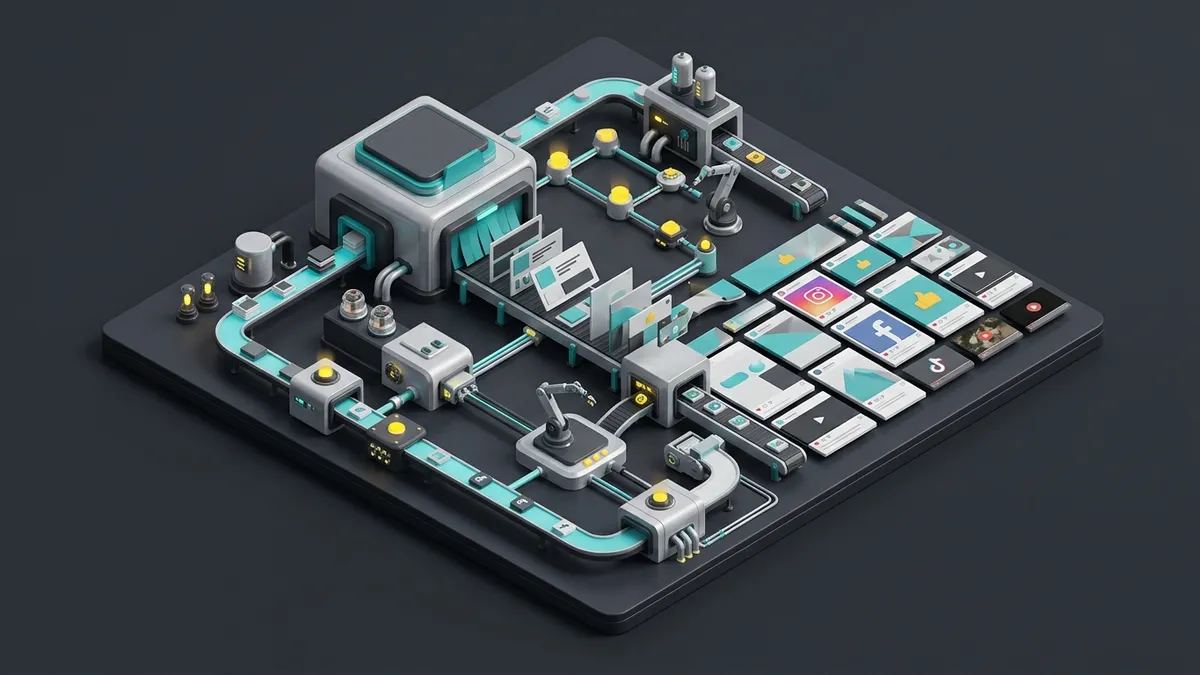
The volume of ad creatives needed for modern digital campaigns is colossal. Marketing and creative teams are often overwhelmed by the sheer number of variations required for social, display, and video channels. The traditional artisanal approach, where each banner is created manually, is no longer sustainable. Choosing a creative automation platform for enterprises is the first step toward modernization. The industrialization of ad creative production has become a necessity to remain competitive in a fast-paced digital economy.
Pillars of creative industrialization
Successful industrialization requires a structured foundation built on several key pillars:
Standardization via Intelligent Templates
Using smart templates allows teams to define the structure of an ad while locking brand guidelines. These templates serve as the engine for content automation, ensuring that every variation produced remains visually accurate. While some teams explore the Canva API for basic design tasks, those aiming for true industrialization require more robust systems to prevent design drift and reduce the need for constant micro-validations.
Automation of Variation Production
To scale, you must move beyond one-off designs. The automatic generation of content variations allows you to create hundreds of adaptations for different sizes and languages from a single data source. Adopting a multi-format creative adaptation platform is essential for tackling ad fatigue in creative Facebook ads where fresh visuals are constantly required.
Centralization and Ecosystem Integration
Industrialization is impossible without a centralized source of truth. A DAM and creative platform integration ensures that creators always use the latest approved assets. Connecting these tools to your delivery ecosystem allows you to accelerate campaign deployment, moving from production to publication in minutes instead of days.
Advanced benefits for marketing performance
Industrialization does not just save time; it improves the bottom line. By reducing the cost per asset, teams can afford to perform extensive A/B testing. Analyzing creative automation KPIs helps brands understand how variation impacts conversion rates. Furthermore, using an automatic visual creation tool for Facebook ads can significantly lower the friction of launching new experiments, especially when you improve ROAS on Facebook through better creative testing, while insights on how to optimize TikTok advertising budget allow brands to reallocate resources toward top-performing high-volume assets.
For complex B2B environments, an enterprise content automation solution provides the governance needed to manage global brands across diverse markets. Understanding the impact of creative automation on sales is crucial for justifying these investments at the executive level. Effective governance is vital because managing international marketing complexity requires a balance between local relevance and global consistency. This level of AI MarTech integration ensures that every piece of content, from Facebook carousel ads to localized display banners, is optimized for peak performance.
Best practices for scaling output
To fully benefit from industrialization, brands should focus on these best practices:
1. Define clear metadata standards for assets in your DAM.
2. Start with high-volume formats like AI-generated Instagram carousels to prove early value.
3. Establish a modular design system that works across both static and video formats.
4. Ensure your content management solution acts as a factory, not just a storage space.
Brandeploy: the platform to industrialize your ad creative production
Brandeploy is a leading Creative Automation and brand management platform specifically engineered for the industrialization of enterprise-scale marketing content. It helps global brands overcome production bottlenecks by unifying design, data, and distribution into a single, cohesive workflow. The platform provides an advanced templating engine for all digital formats, including HTML5 banners and professional video, coupled with powerful AI-assisted resizing and mass generation capabilities. By centralizing assets and automating the manual labor of variation creation, Brandeploy empowers teams to scale their creative output while maintaining 100% brand compliance. To see how our technology can transform your production line, we invite you to book a demo of the platform today.
FAQ
What is industrialization of ad creative production?
Industrialization of ad creative production refers to the use of standardized workflows and automated technologies to generate large volumes of marketing assets. Unlike manual creation, it uses smart templates and data-driven processes to ensure consistency and speed across multiple digital channels.
How does creative automation improve campaign speed?
Creative automation accelerates the production lifecycle by automating repetitive tasks such as resizing and localizing banners. This allows teams to focus on strategy and messaging while significantly reducing the time-to-market for complex advertising campaigns.
How can brand consistency be maintained at scale?
Standardized templates allow brands to lock essential elements like logos and colors while keeping other fields flexible. This ensures that every high-volume variation remains compliant with brand guidelines, regardless of who produces the final asset.
What role does data play in modern ad production?
Data-driven ad production uses external sources like PIM systems or product feeds to automatically populate creative templates. This connection enables real-time updates and ensures that prices, stock levels, and product details are always accurate in digital ads.
When should a company industrialize its creative production?
Digital teams should consider industrialization when manual workflows become a bottleneck. Signs include high costs for simple resizing, long lead times for campaigns, and a lack of bandwidth for A/B testing multiple creative variations.
Written by
Rédaction Brandeploy
Ready to scale your content production?
Book a demo