AI personalization engine: the future of targeted marketing?
An AI personalization engine is a sophisticated technological suite that leverages machine learning and neural networks to analyze user behavior, demographics, and real-time context. Its primary purpose is to move away from…
Rédaction Brandeploy · Published 30 April 2025 · Updated 11 October 2026
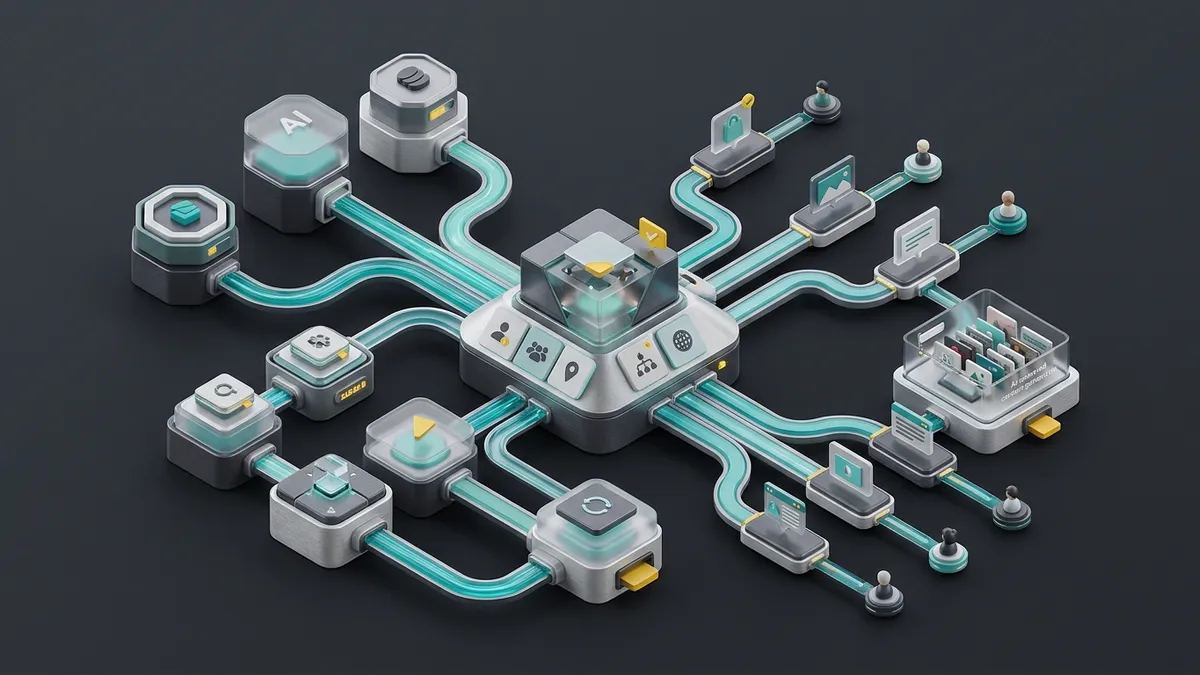
An AI personalization engine is a sophisticated technological suite that leverages machine learning and neural networks to analyze user behavior, demographics, and real-time context. Its primary purpose is to move away from "one-size-fits-all" marketing toward hyper-individualized interactions. By integrating these engines into a MarTech stack for large enterprises, brands can deliver personalized experiences that increase engagement, conversion rates, and long-term customer loyalty at an industrial scale.
The core mechanics of AI-driven personalization
Understanding how these engines function is essential for any modern marketer. The process is generally divided into five autonomous stages which transform raw data into a unique user experience. It starts with data aggregation, where the system pulls information from various silos like CRM, web analytics, and purchase history. Next, the engine uses predictive modeling to create dynamic micro-segments, often predicting a user's intent before they even take an action.
The platform then makes a real-time decision, selecting the most relevant offer or content piece. This is where AI ad generator technology becomes vital, as it ensures the engine has enough creative assets to choose from. After delivery, the engine enters a self-learning phase, analyzing clicks and conversions to optimize its future recommendations. For brands looking to improve visual quality during this process, using an AI upscaling tool ensures that every personalized recommendation looks professional across all devices.
Key benefits for modern brands
The implementation of an AI personalization engine offers several strategic advantages. First, it maximizes Customer Lifetime Value (CLV) by maintaining relevance throughout the buyer journey. Second, it improves operational efficiency; instead of manual A/B testing, the AI handles optimization automatically. This is particularly effective when combined with a visual A/B testing tool to validate which creative directions resonate best with specific cohorts.
Why content is the biggest bottleneck in personalization
Even the most advanced AI personalization engine is limited by the inventory of content it can serve. To effectively target a thousand different micro-segments, a brand needs a thousand different content variations. If a team only produces generic assets, the engine's predictive power is wasted. Many organizations now reduce marketing content production costs by automating the creation of these variations. Without a high-volume supply of images, videos, and copy, the "brain" (the AI engine) has no "muscles" to execute its decisions.
To solve this, companies are turning to creative tools to fill the gap. For instance, creating multiple packshots with AI allows e-commerce brands to show different product angles based on user preferences. Similarly, an AI voice-over can personalize video ads in different languages, while ElevenLabs provides the high-fidelity audio needed for premium brand experiences. For visual content, many turn to AI tools for advertising to ensure they can sustain the volume required by the personalization engine. Furthermore, software like Rephrase.AI provides personalized videos with AI avatars to create human-centric connections at scale.
Scaling production for successful implementation
To reach full maturity, brands must integrate their personalization engine with a content factory. Utilizing an AI ad creation tool allows teams to maintain autonomy and speed. For social media and programmatic campaigns, tools like Smartly.io can help automate the deployment of these personalized assets. Furthermore, using an AI face enhancer ensures that human-centric imagery remains sharp and engaging, even when generated at high speeds. Finally, integrating Notion AI into the workspace can help marketing teams organize the complex workflows required to manage these large-scale personalization projects.
Leveraging Brandeploy for Content Scaling
Brandeploy serves as the essential "Content Factory" designed to fuel AI personalization engines by producing high-volume, brand-compliant creative assets. While the AI engine makes the decision on what to show, Brandeploy automates the production of thousands of variations, including banners, emails, and web components. By using intelligent, locked templates, Brandeploy ensures that every dynamically generated asset adheres strictly to brand guidelines, preventing the brand dilution often associated with automated scaling. It bridges the gap between data-driven decisions and creative execution, allowing global teams to localize and adapt content instantly. Discover how Brandeploy's AI creative automation produces on-brand banners, videos and visuals at scale. To see how our platform can transform your production workflow, we invite you to book a demo.
FAQ
What is an AI personalization engine?
An AI personalization engine is a specialized software system that uses machine learning to analyze user data—such as browsing history and preferences—to deliver tailored content or product recommendations in real-time. Unlike traditional rule-based systems, these engines learn from user behavior to improve accuracy and engagement automatically, allowing brands to offer unique experiences to millions of customers simultaneously.
How do AI personalization engines work?
These engines function through a continuous loop of data collection, analysis, and execution. First, they aggregate data from CRMs and web interactions. Then, they use predictive modeling to identify the best content for a specific user. Finally, they deliver that asset through a CMS or email tool, while monitoring results to refine future predictions. This requires a robust AI ad generator to feed the system with variations.
What are the benefits of using AI for personalization?
The primary benefit is a significant increase in conversion rates and customer loyalty. By showing users only what is relevant to them, brands reduce "choice paralysis" and digital noise. This efficiency also allows for better budget allocation in advertising, as seen when companies reduce marketing content production costs by automating the delivery of high-performing, personalized creative assets at scale.
What is the main challenge in AI-driven personalization?
The biggest challenge is content scalability. An AI engine can identify 1,000 different micro-segments, but it is useless if the marketing team only has three generic banners. To succeed, brands must bridge the gap between AI decision-making and creative production, often by using creative automation tools that generate the necessary volume of "on-brand" assets automatically.
How can brands produce enough content to feed a personalization engine?
Brands need to connect the engine to a content factory that automates the creation of variations. Creative tools fill the gap: AI packshots show different product angles, AI voice-overs adapt video ads to several languages, and AI ad creation tools keep teams fast and autonomous. Locked templates, such as those in Brandeploy, help every automated variation follow brand guidelines and avoid brand dilution.
Written by
Rédaction Brandeploy
Ready to scale your content production?
Book a demo